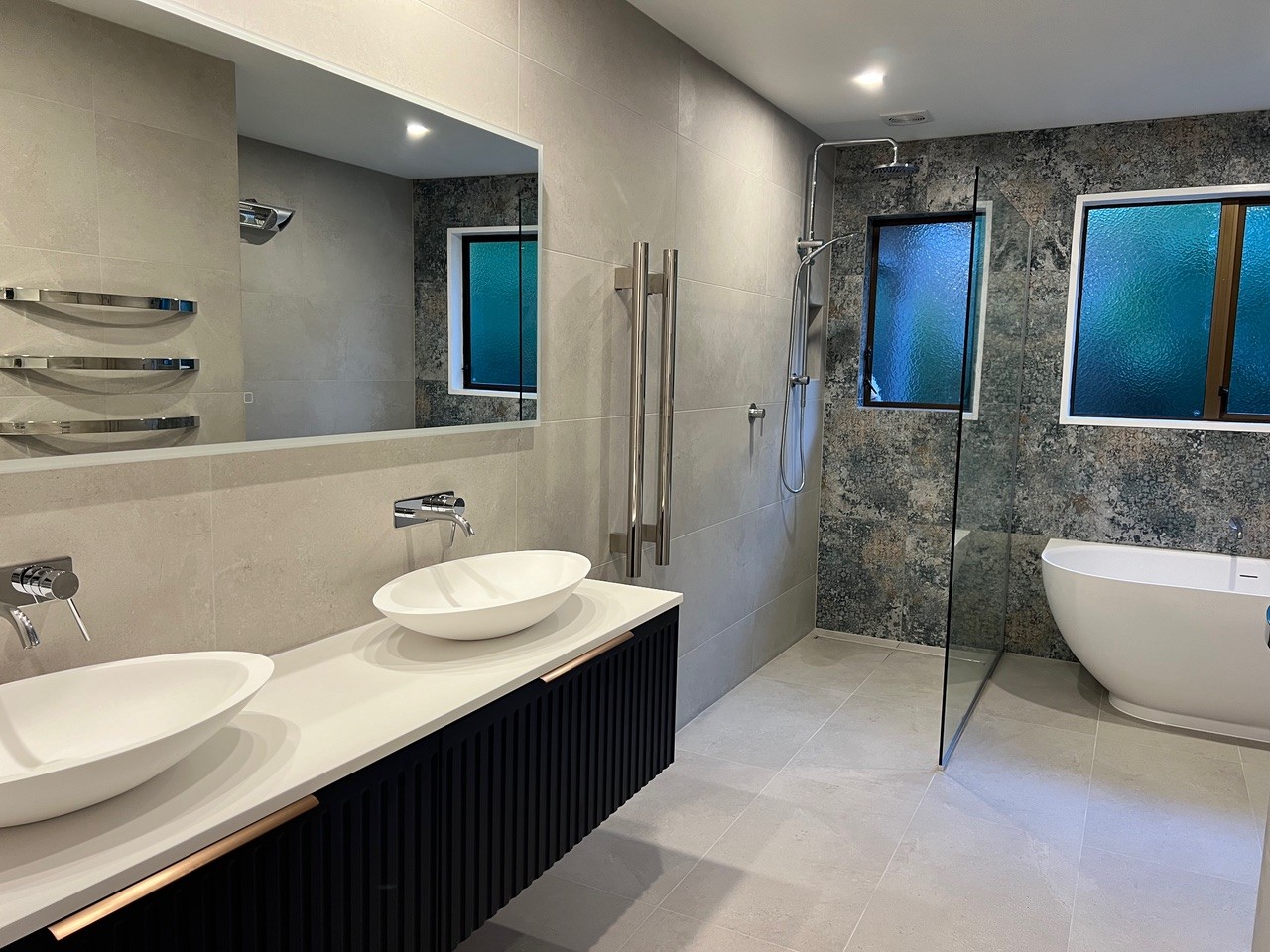
There are bathroom renovations, and then there are bathroom transformations. The kind where every material choice is deliberate, every finish earns its place, and the result feels less like a renovation and more like a residential work of art. The English Oak project, designed by Auckland-based Rebecca Logan Design, sits firmly in the latter category.
Encompassing three bespoke bathrooms and a laundry, this project is a masterclass in how cohesive design thinking can produce spaces that are both deeply personal and quietly extraordinary.
Three Spaces, One Characters
What makes this project remarkable is not that the bathrooms look the same. It is that they don't.
Rebecca Logan approached each space with a distinct point of view, allowing material selection, tone, and layered detail to differentiate the rooms while keeping the overall project feeling resolved. This is a harder thing to achieve than it sounds. Giving three bathrooms within one home their own character, without them feeling disconnected, requires a designer who understands how to hold a palette loosely.
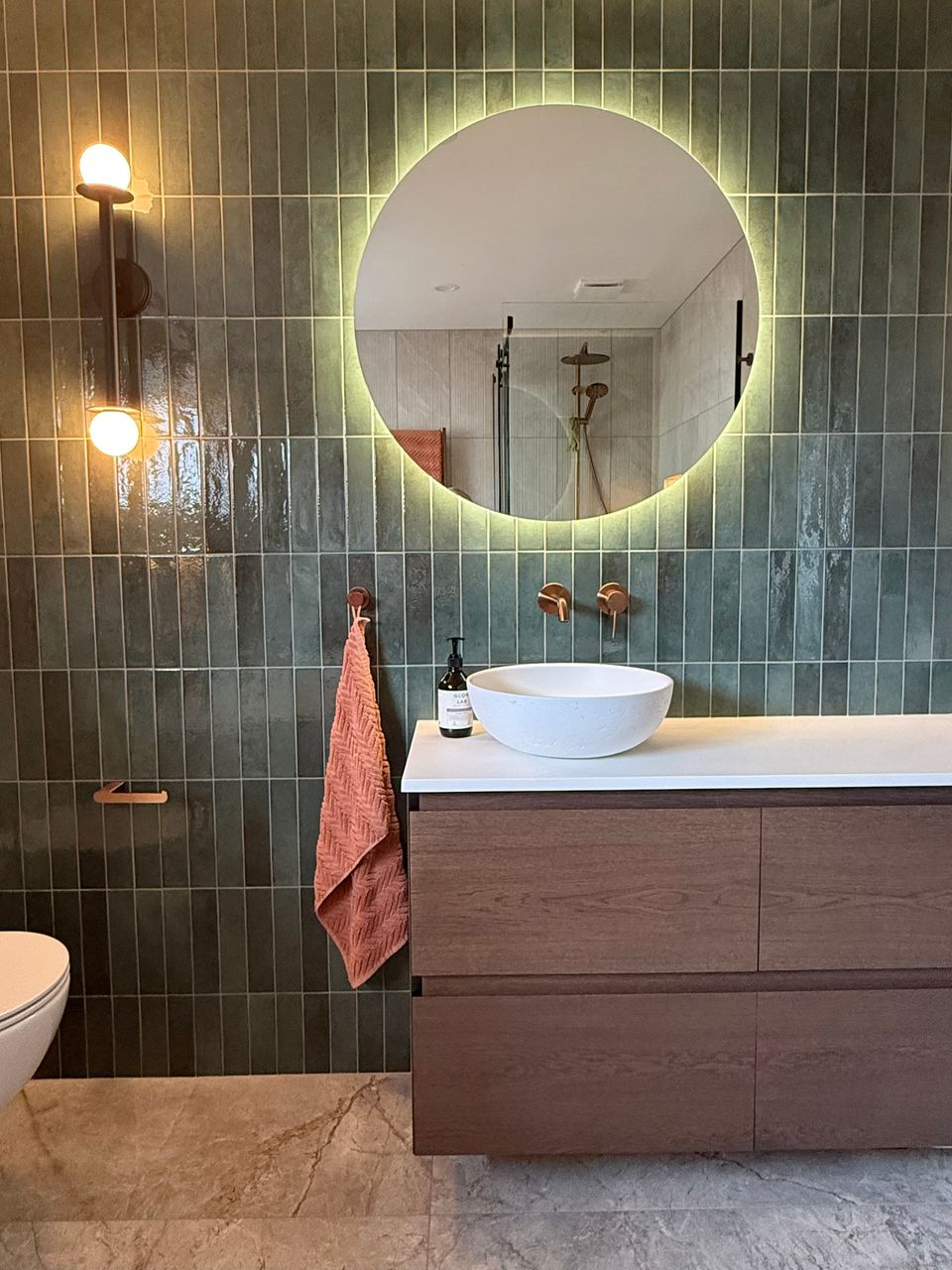
The family bathroom takes an atmospheric direction. Depth, gloss, and layered lighting work together to create a sense of calm retreat. Two primary tiles are paired for texture and visual interest, while a green feature tile introduces contrast and energy. Timber accents and warm metallic finishes carry warmth through the palette, and a contemporary wall light adds a clean edge without competing with the rest of the room.
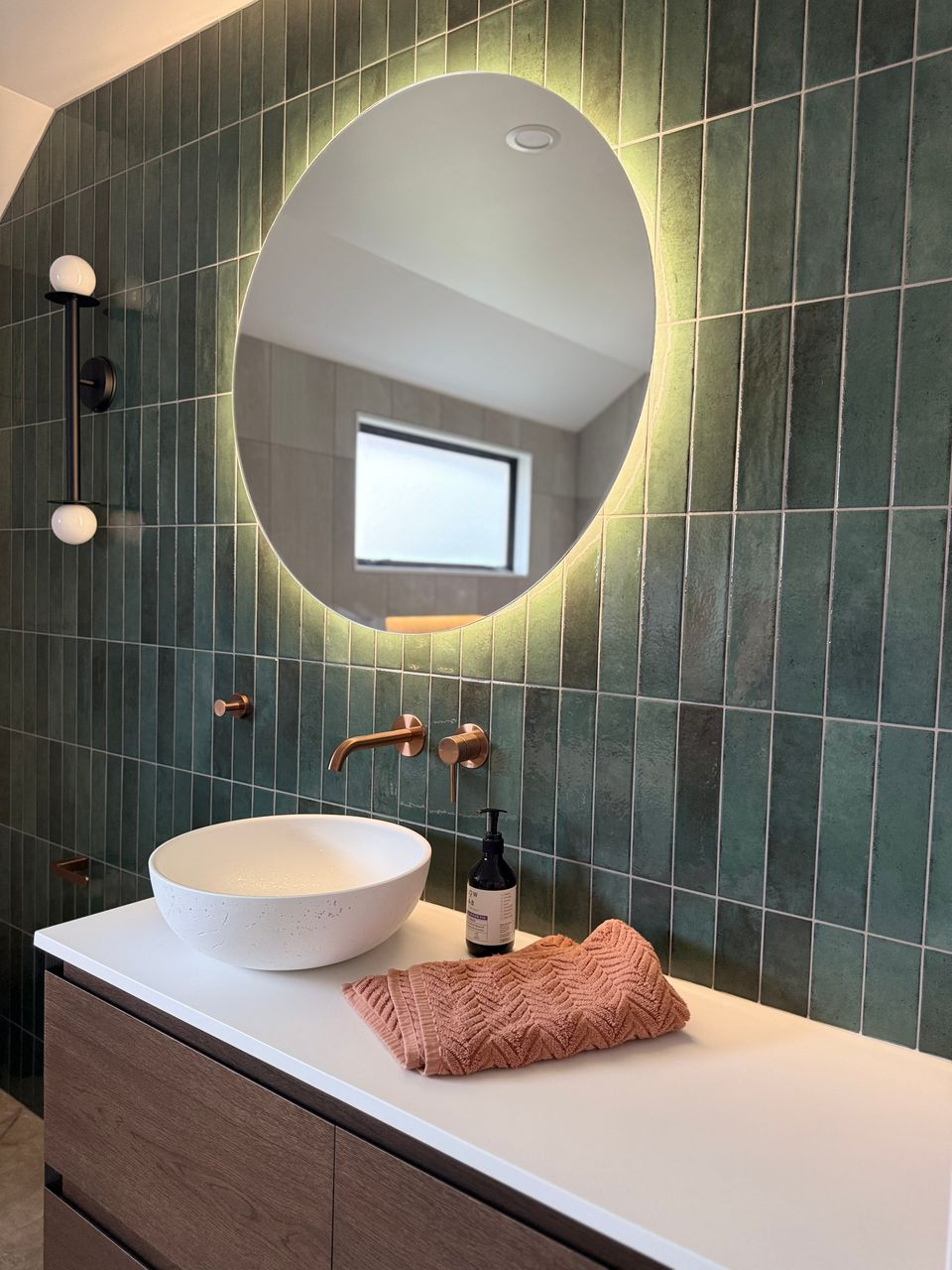
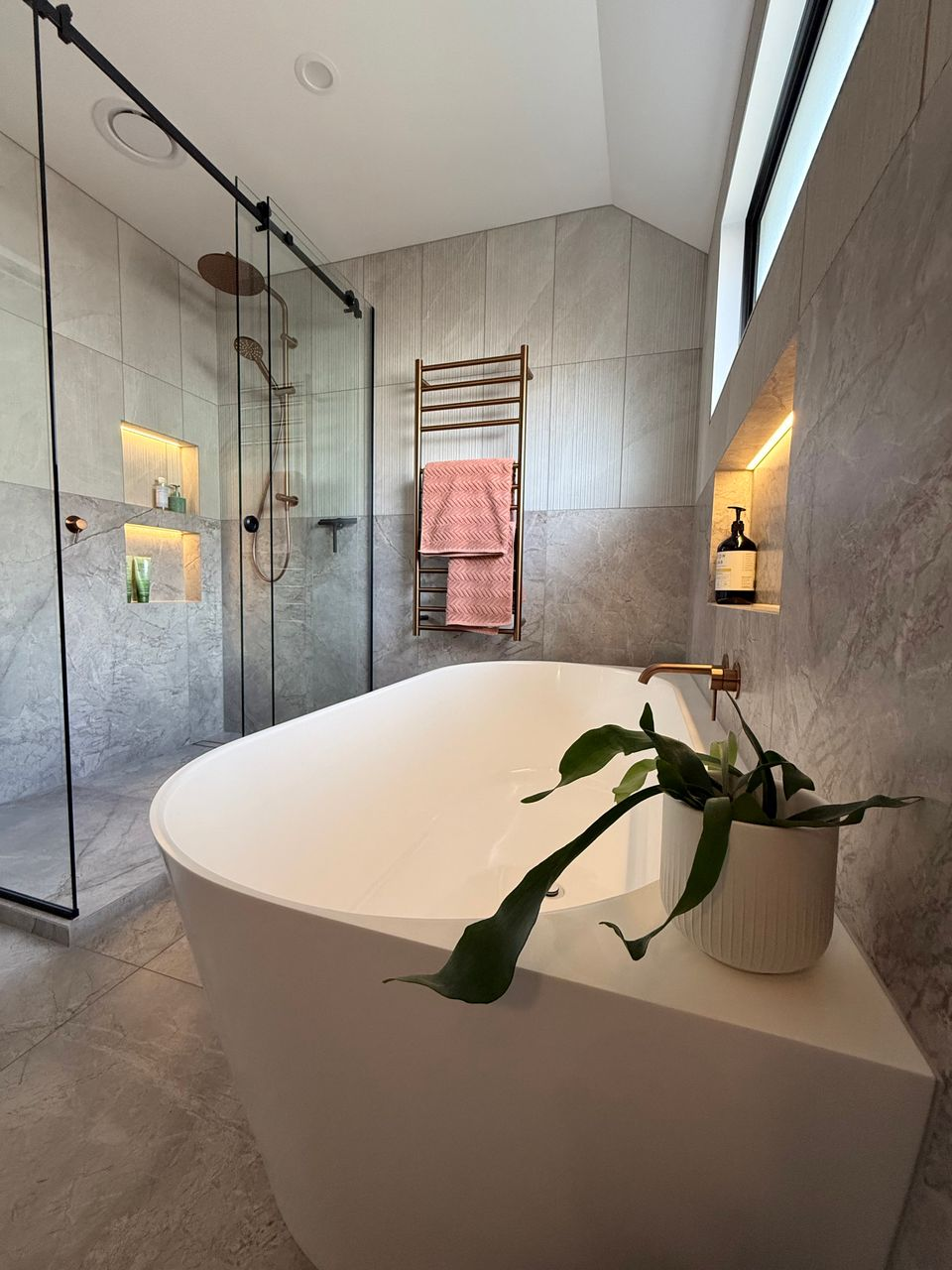
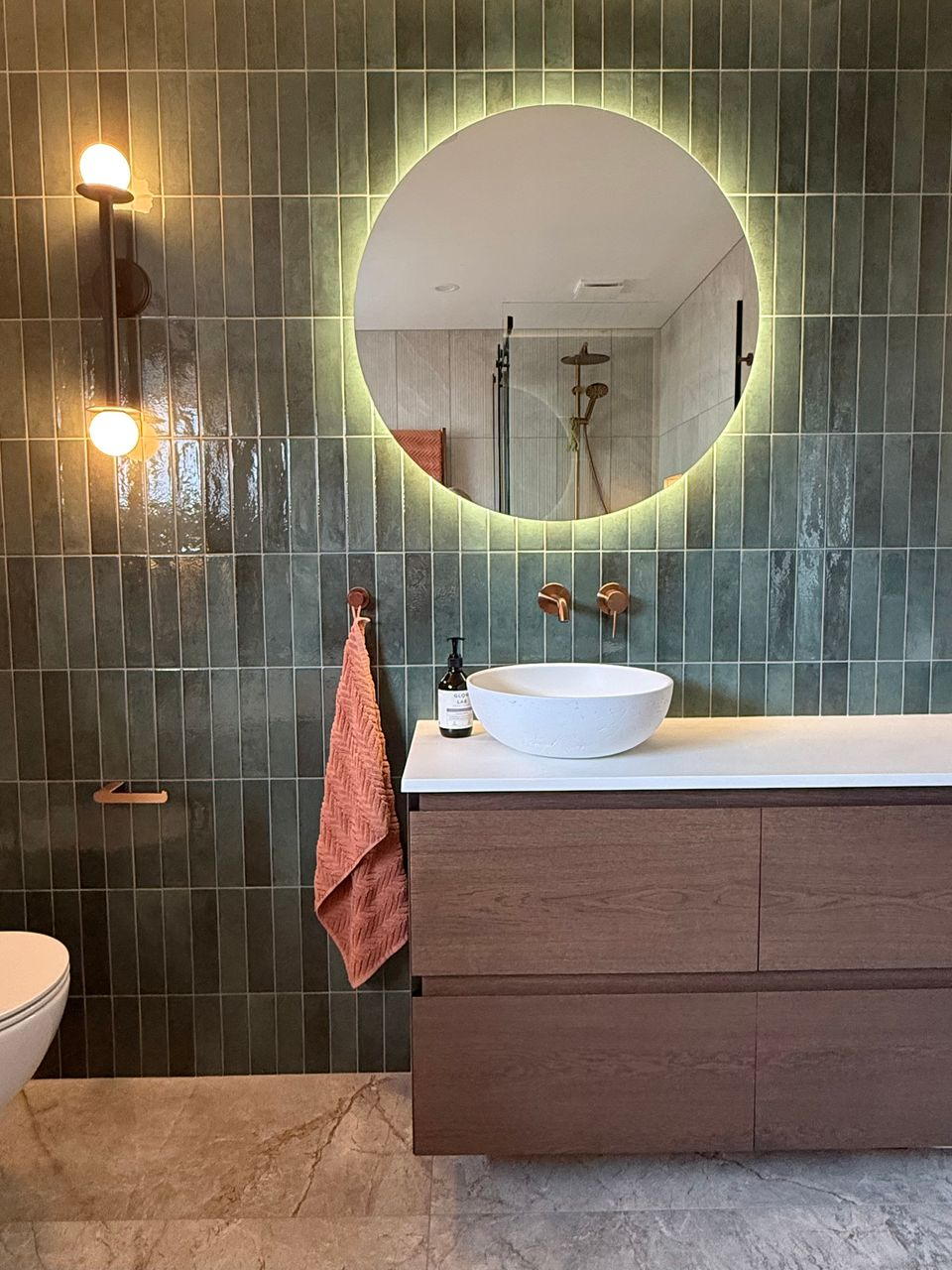
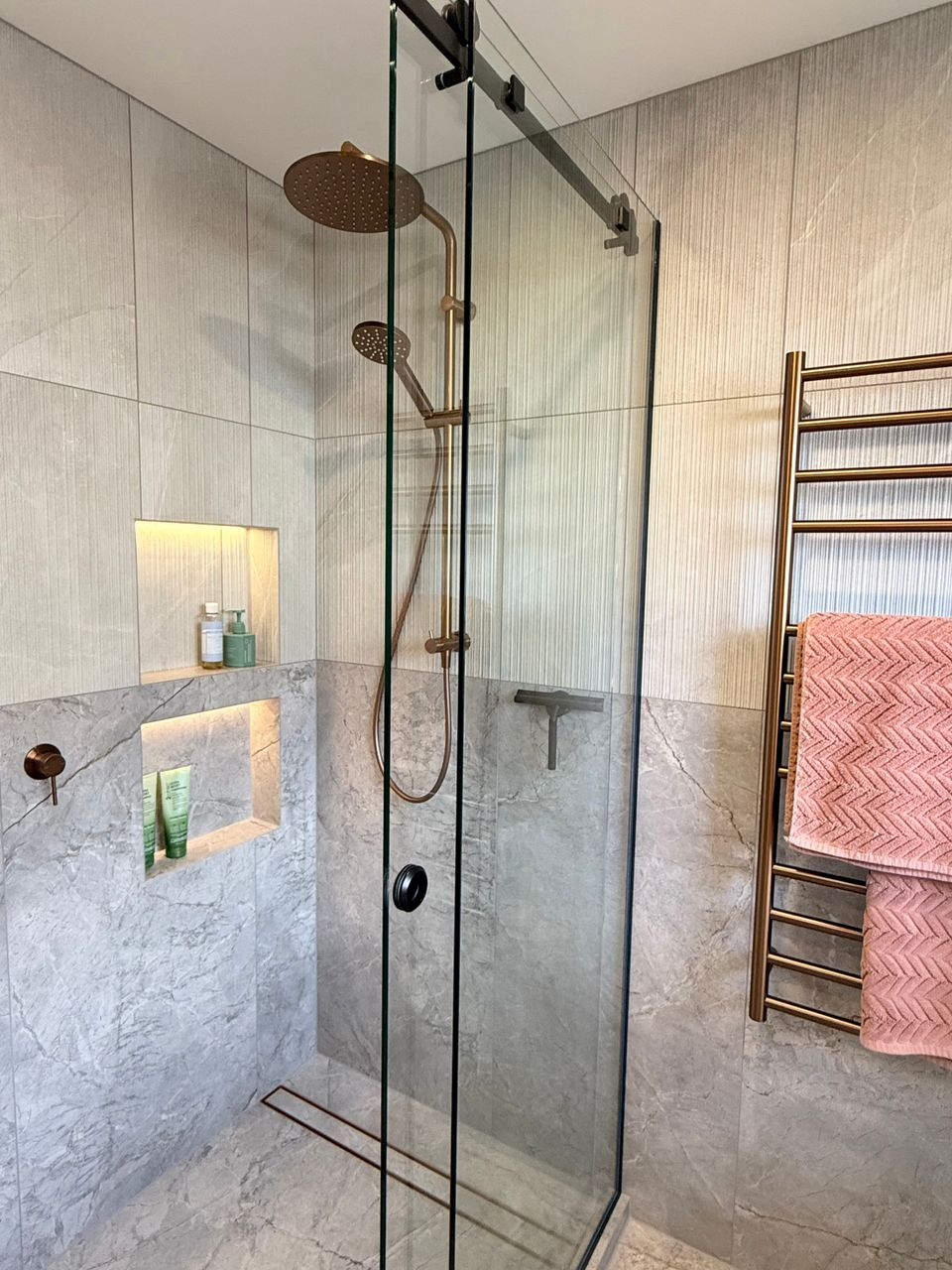
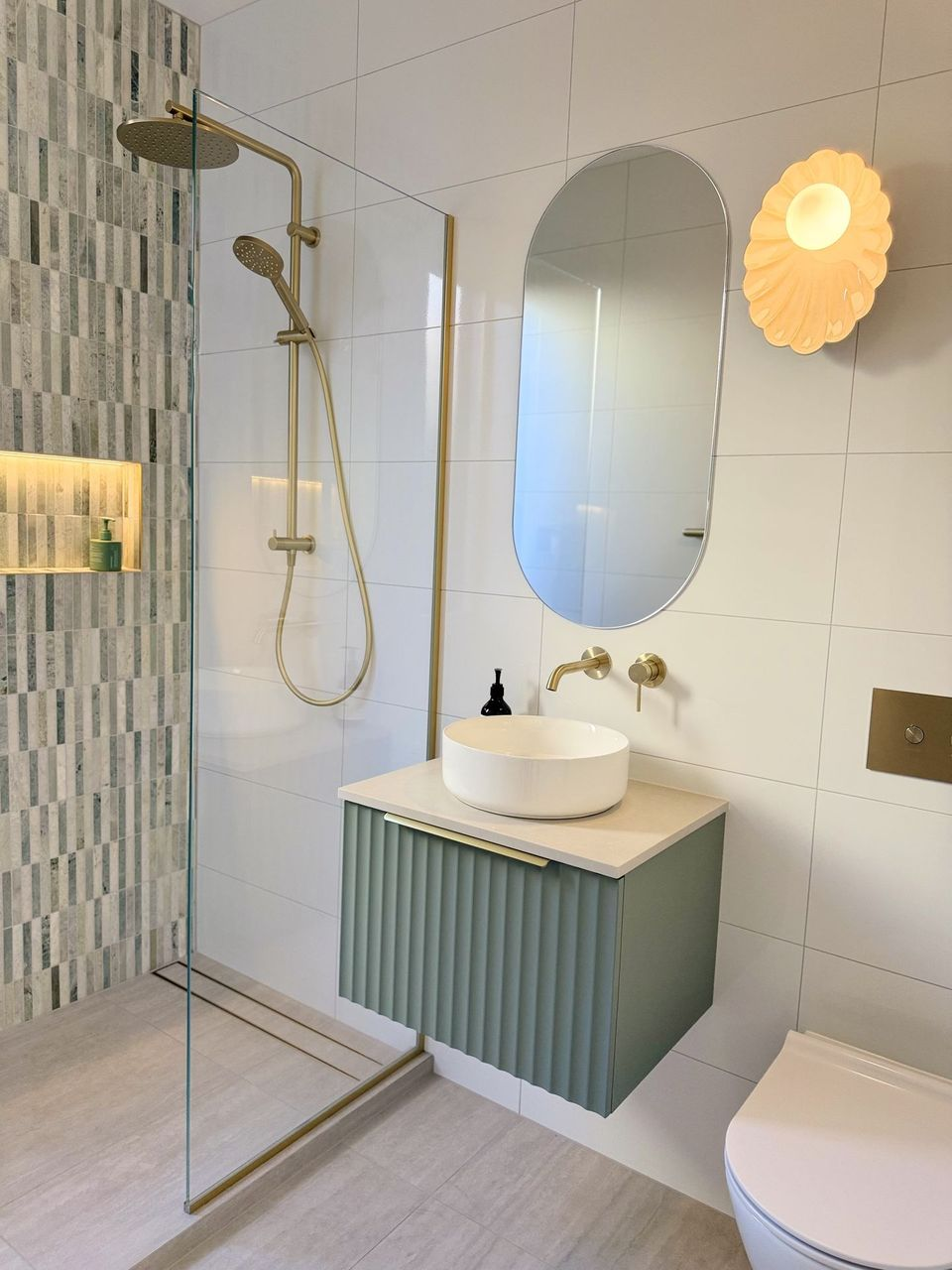
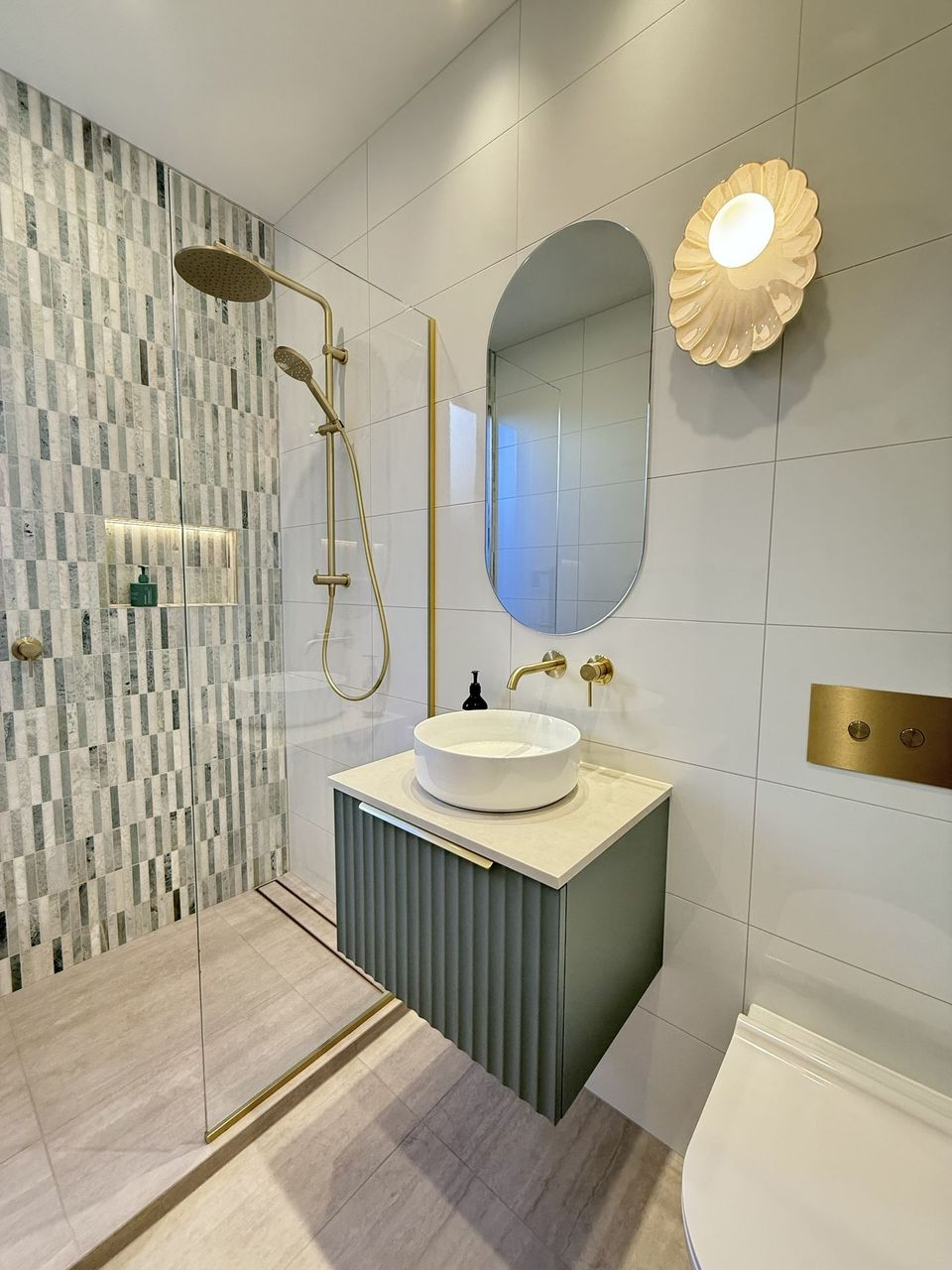
The guest bathroom takes a fresher, lighter approach. Soft colour and thoughtful texture create a space that feels welcoming rather than formal. A vertical green marble tile introduces movement and natural variation, complemented by a softly lit recessed niche. The fluted green vanity ties back to the sculptural oyster wall light in a way that is subtle but satisfying — the kind of detail that rewards a second look.
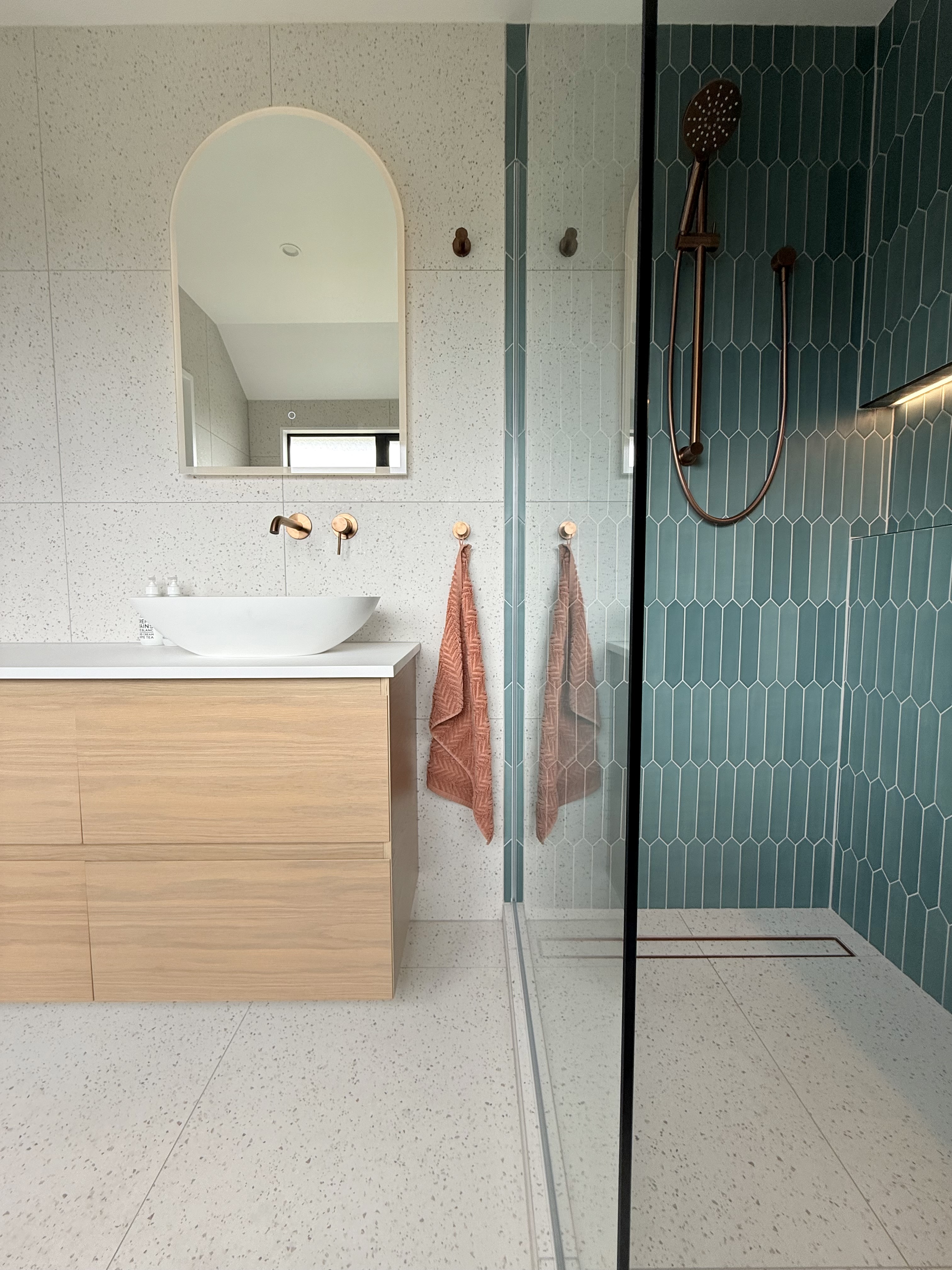
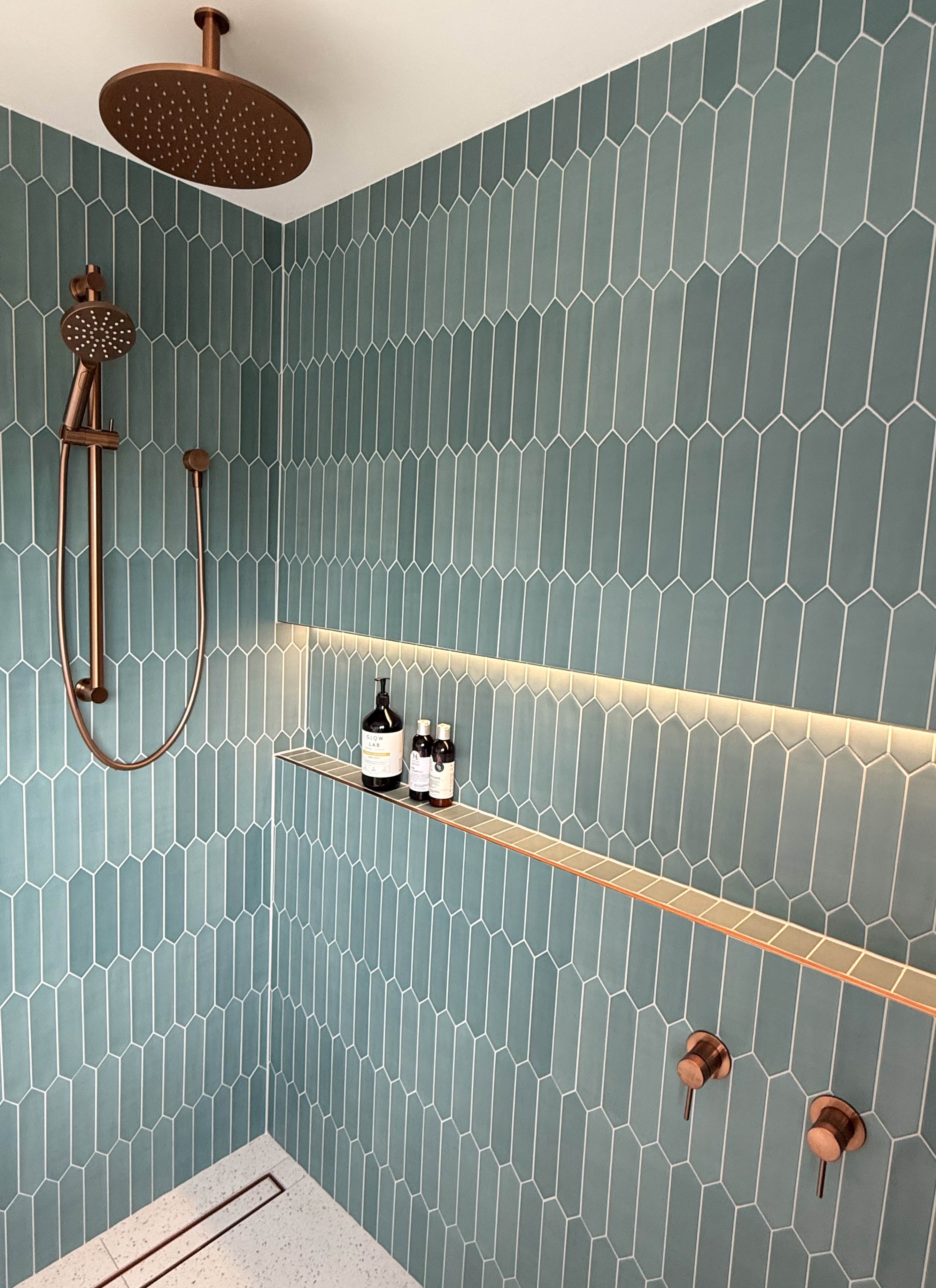
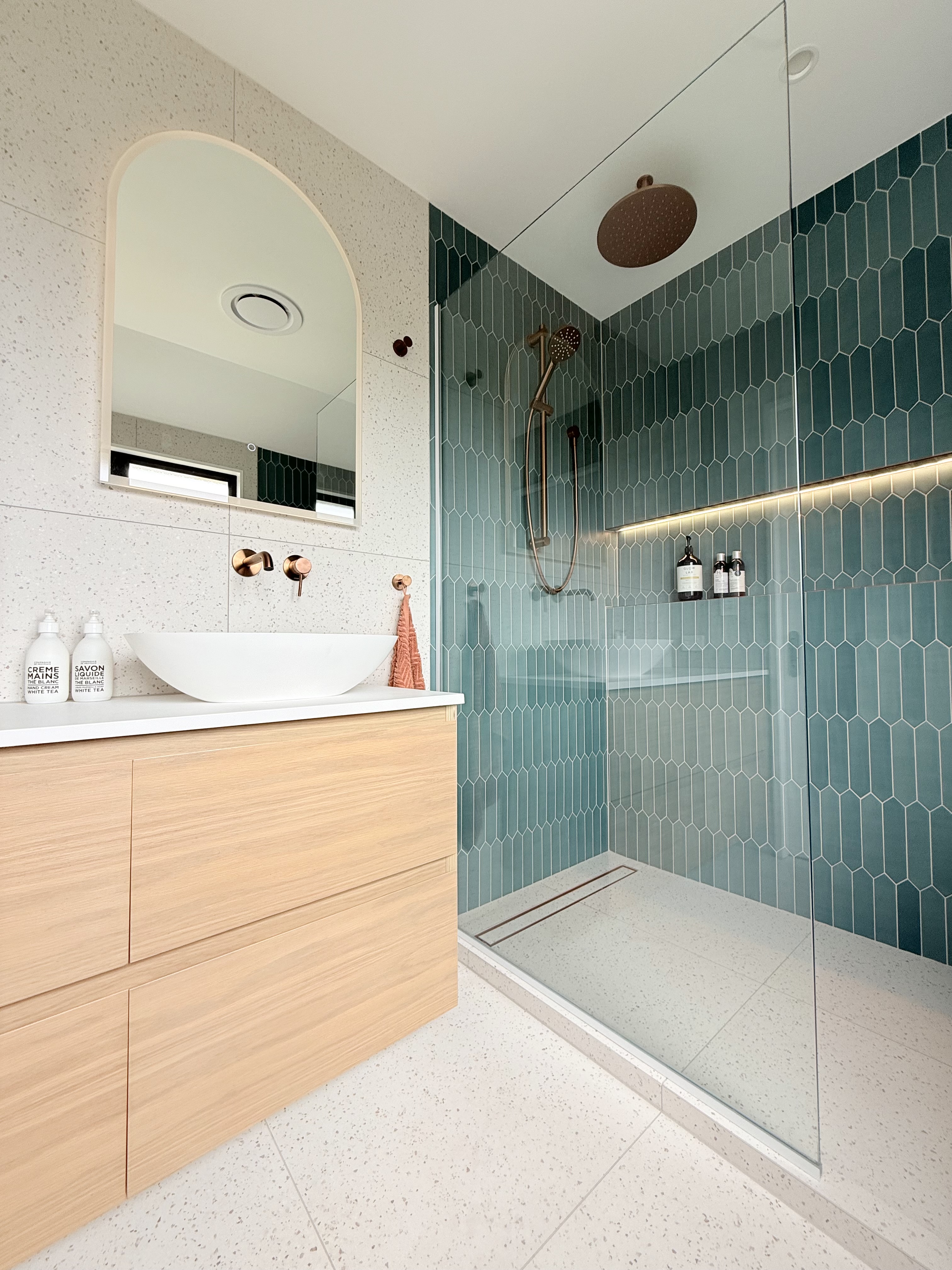
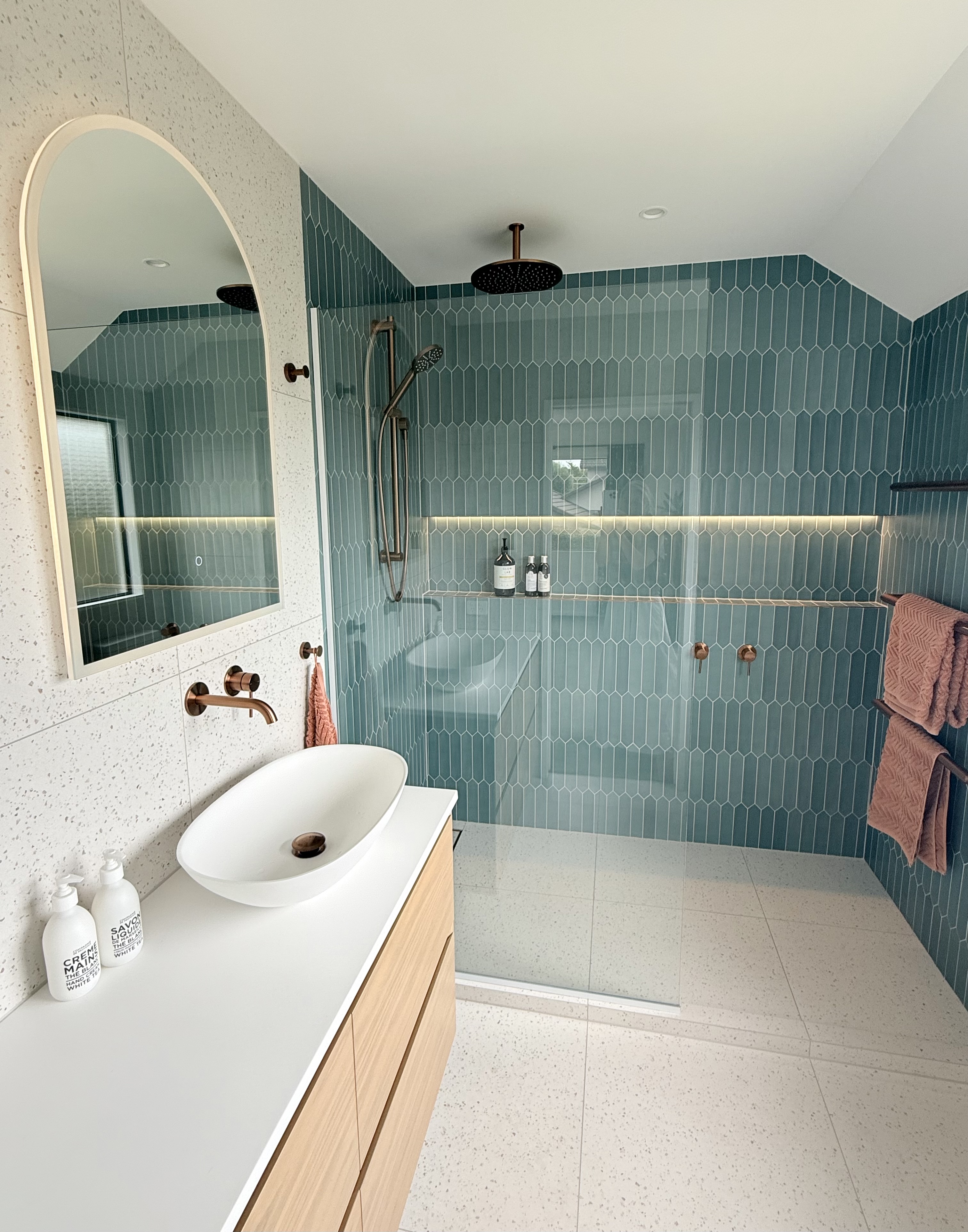
The ensuite balances the two. Practical and refined, it relies on careful detailing rather than bold statements. A tiled niche, gently lit, becomes the natural focal point, while picket tiles in the shower add colour and form without overwhelming the space.
The Role of Product Quality
Spaces like these do not happen by accident, and they do not happen with compromise. Every product in a project of this calibre is working hard, whether it is contributing to the visual palette, the tactile experience, or the long-term durability of the room.
This is where the specification of quality products becomes central to the outcome. When a designer is working with vertical marble tile, fluted cabinetry, and bespoke niches, the fixtures and fittings need to hold their own. A tapware finish that shifts, a shower fitting that fails aesthetically or functionally, a vanity basin that does not sit right — any one of these can undermine weeks of careful planning.
For design professionals working on projects of this quality, product selection is part of the design process, not an afterthought.
Minor Changes, Major Project
One of the quieter achievements in this project is what happened to the laundry. Minor wall adjustments allowed for a reconfiguration that significantly increased storage and improved usability throughout. It is a reminder that good spatial planning does not always require demolishing everything — sometimes a considered shift in layout unlocks a room's potential entirely.
This kind of thinking applies to the bathrooms too. The spaces are not large by any measure, but they feel considered. Proportions are right. Lighting is layered. Storage is resolved. The result is that the rooms feel generous, even where the footprint is modest.
What This Project Tells Us About Bathroom Design Currently
The English Oak project reflects a broader shift in how New Zealanders are approaching bathroom renovations. The days of bathrooms as purely functional spaces are well behind us. Homeowners are investing in rooms that offer a genuine experience — retreat, calm, a moment of luxury in an otherwise busy day.
What this requires from designers is the ability to move between function and feeling without losing either. And what it requires from products is the same: performance that holds up alongside aesthetics that elevate.
The result, when everything comes together as it does here, is a home that simply feels better to live in.
Designed by Rebecca Logan Design. View the full project portfolio at rebeccalogandesign.co.nz