Inset Basins vs. Vessel Basins: Which Is Right for You?
Renovating your bathroom and not sure if you should pick an inset basin or vessel basin? We've got you covered with the pros and cons of both.
An often under considered element of bathroom design, the basin can be a defining piece of any bathroom. Offering different functionalities, aesthetics, and relationships with vanities and tapware, basins are worth the extra contemplation that might just tie your bathroom space together.
To understand the impact that basins have on bathroom design, it’s important to get to know the two main types of basin: Inset basins and Vessel basins.
What’s the Difference Between Inset Basins and Vessel Basins?
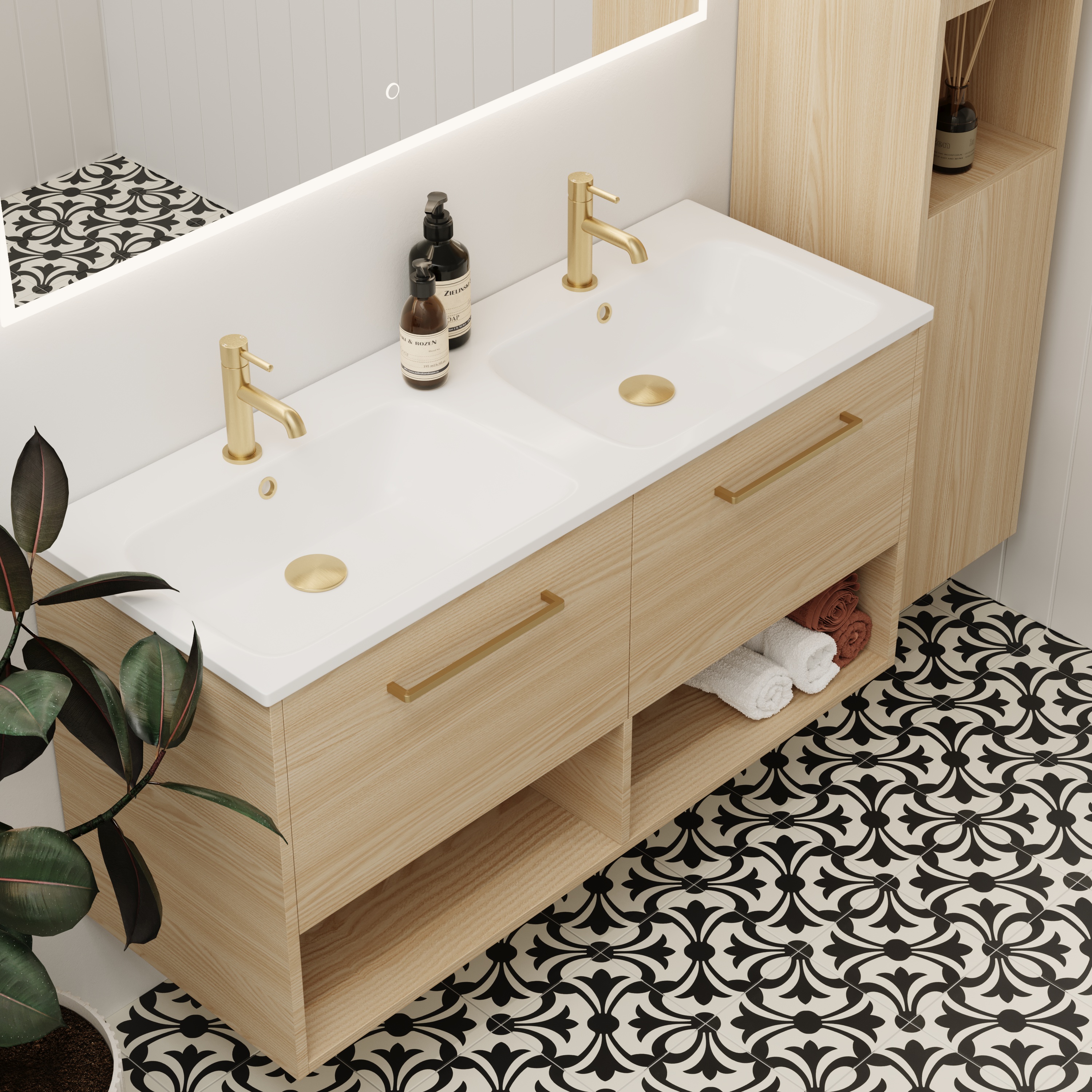
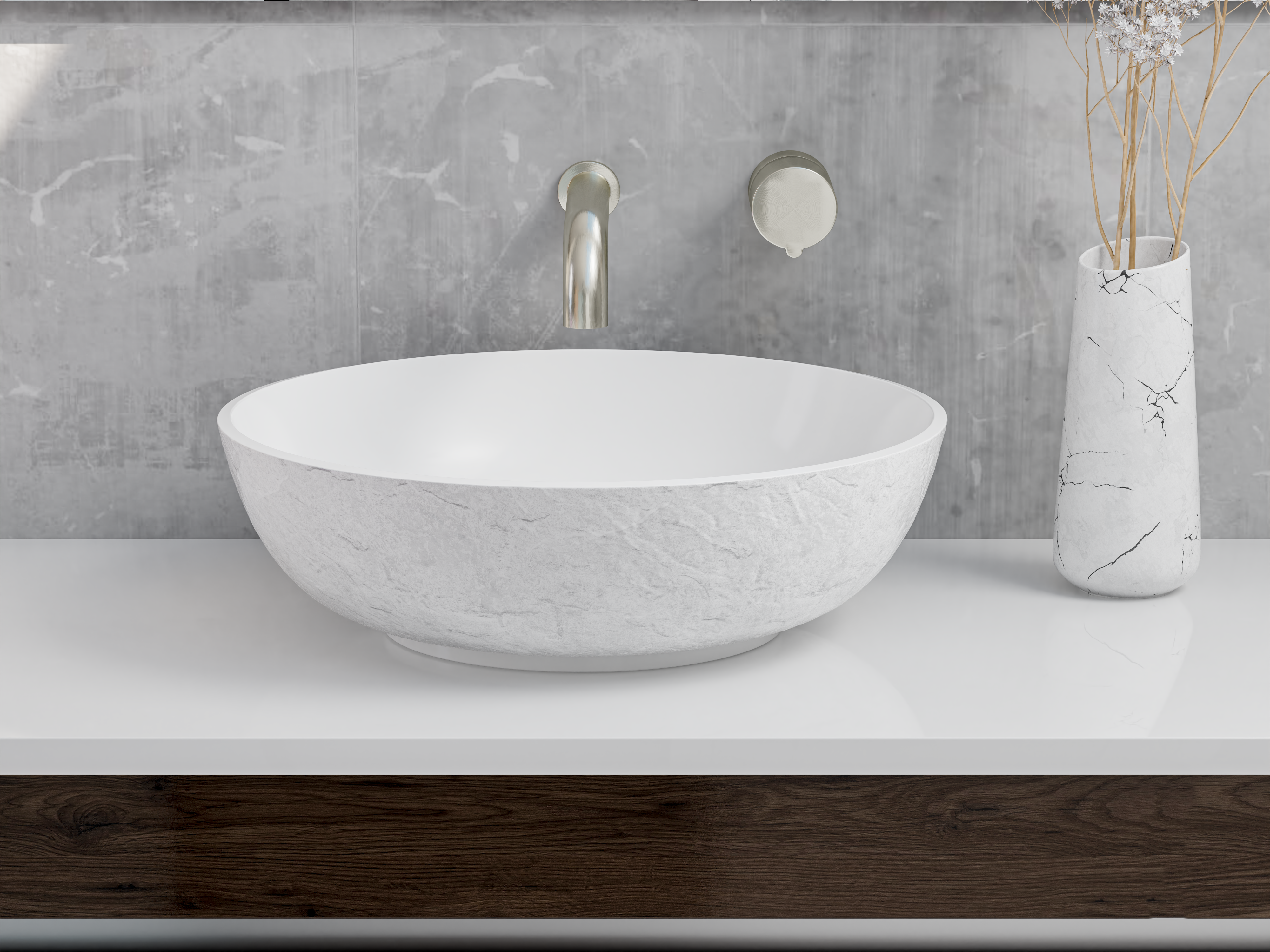
Inset basins are recessed into the slab top of a bathroom vanity, whereas a vessel basin is a freestanding basin that sits on top of the slab top.
Both inset basins and vessel basins have their own pros and cons, and which is right for you will depend solely on your space and your vision. Whatever your preference for function, aesthetic, or budget, there’s a basin out there perfect for you.
Inset Basins vs. Vessel Basins: Pros and Cons
Inset Basins
Pros
- Sleek Aesthetic — Tucked away neatly into the cabinetry, inset basins offer a sleek, minimalist aesthetic that complements a wide variety of design concepts and vanity options.
- Easy to Clean — The flush integration of inset basins with the cabinetry means that the cleaning of both the basin and its surrounds is a breeze.
- Overflow — Inset basins offer the opportunity to hide more technical pieces of plumbing inside the vanity, and therefore can have an overflow. With an overflow, you’ll never be caught out over filling the sink.
- Bang for Buck — Requiring no additional assembly costs at the manufacturing centre, a vanity with an inset basin is a simple, streamlined option offering great value.
Cons
- Limited Design Options — Compared to vessel basins, inset basins come with more limited design options. With functionality number one in a vessel basin, colour options are generally matte or gloss white, and shape options are normally more rectangular than round.
- Reduced Storage — The recessing of an inset basin into the vanity does compromise a little of the vanity’s storage space.
Vessel Basins
Pros
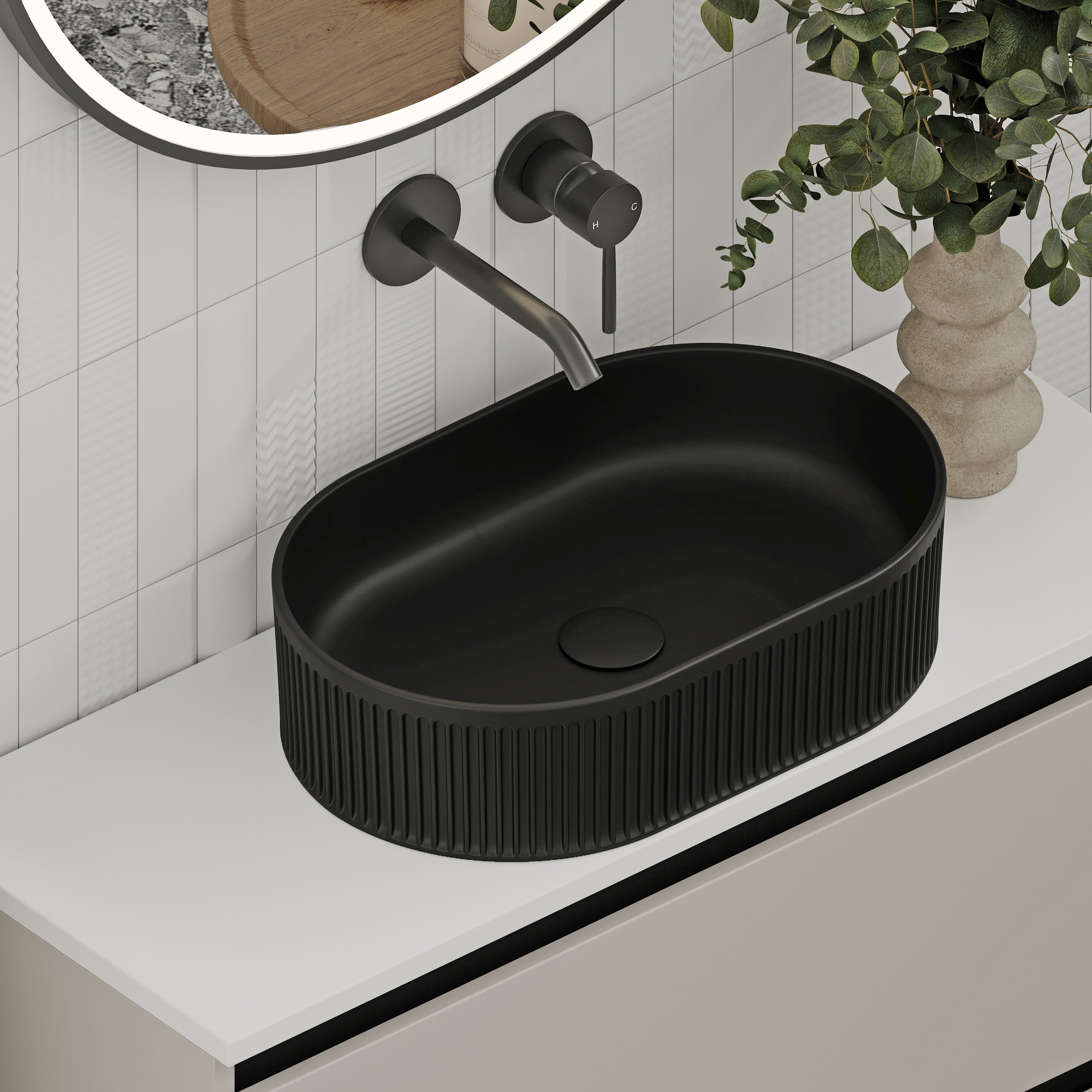
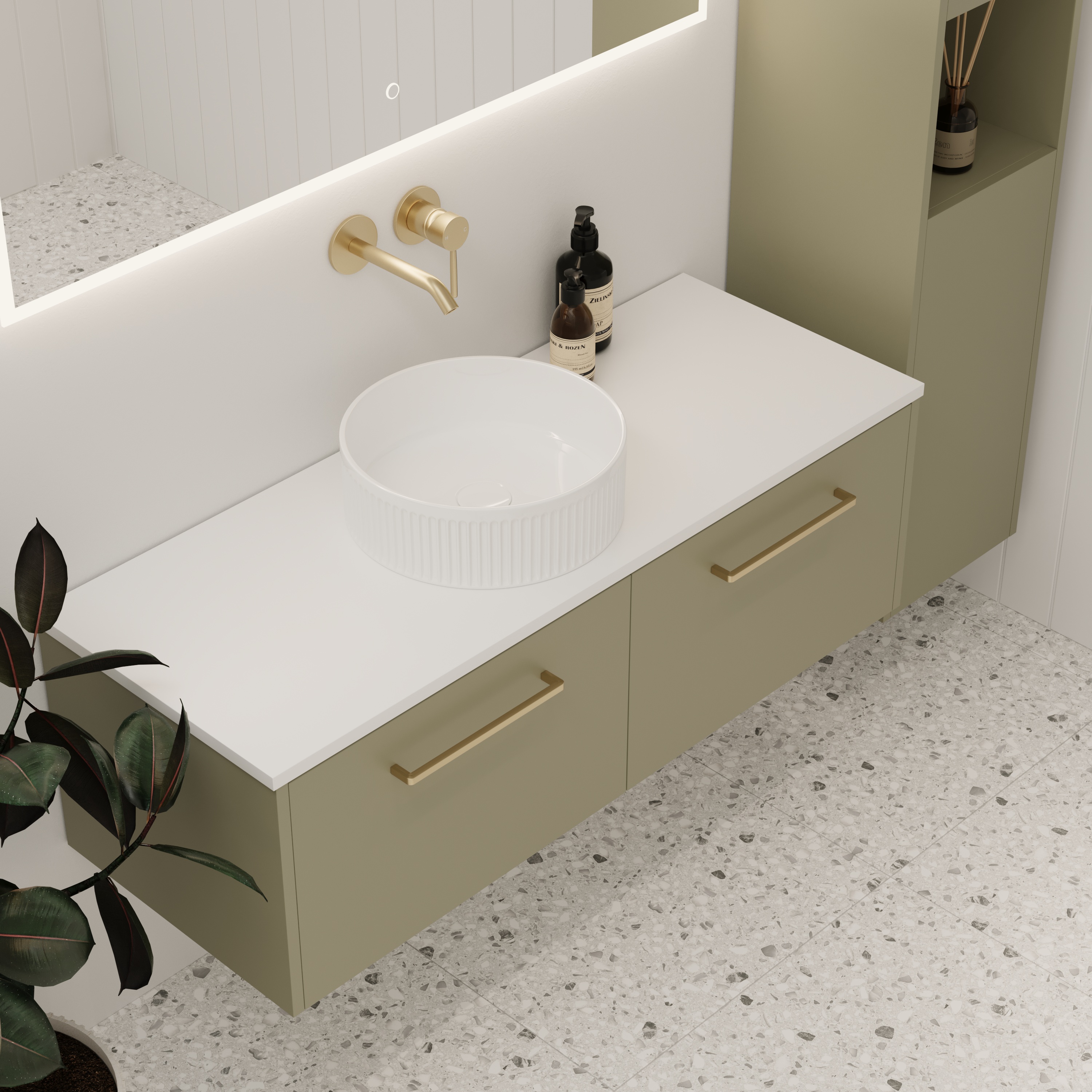
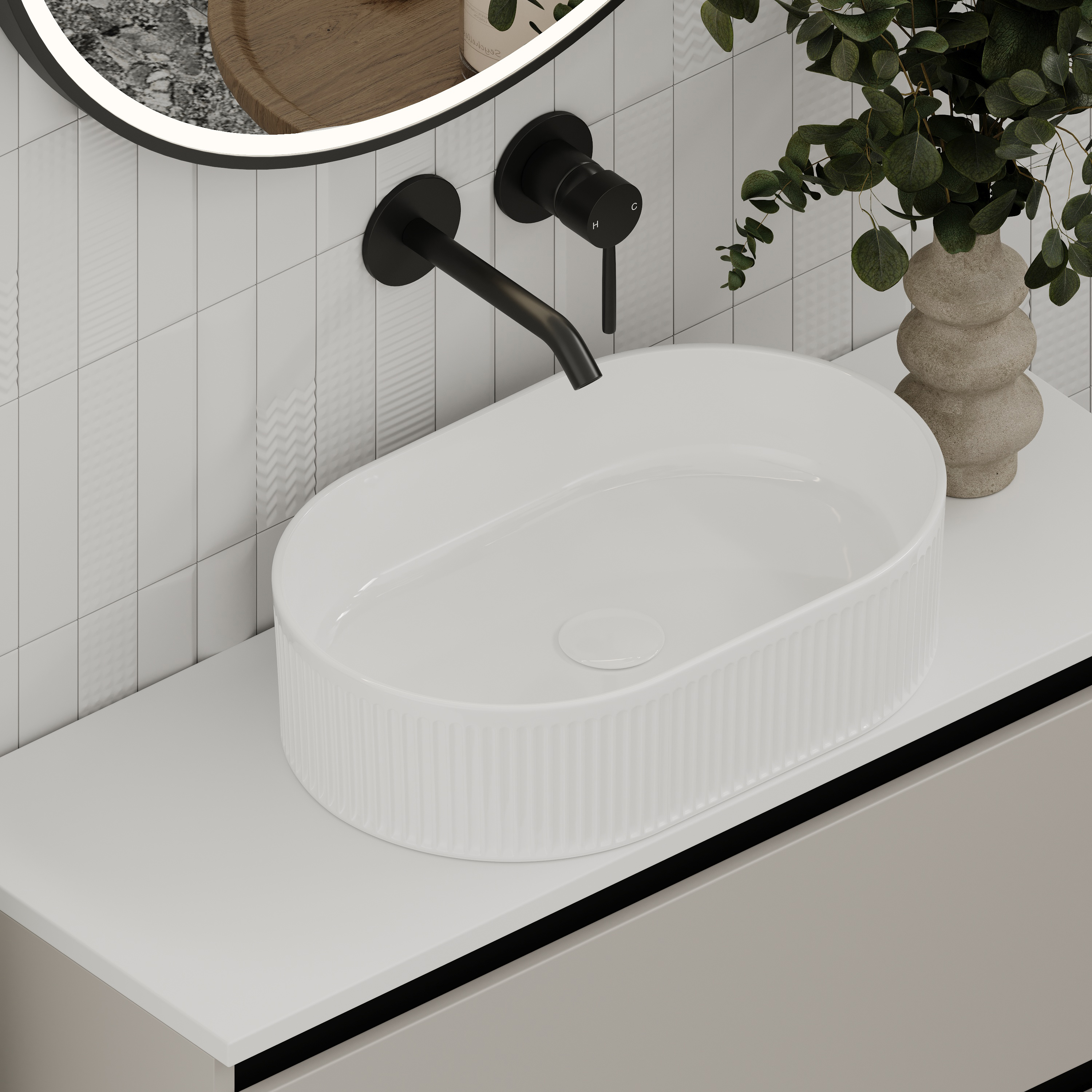
- Statement Piece — Vessel basins are undeniably eye-catching. Resting conspicuously atop a vanity, a vessel basin instantly offers a bathroom a point of interest, centering the space.
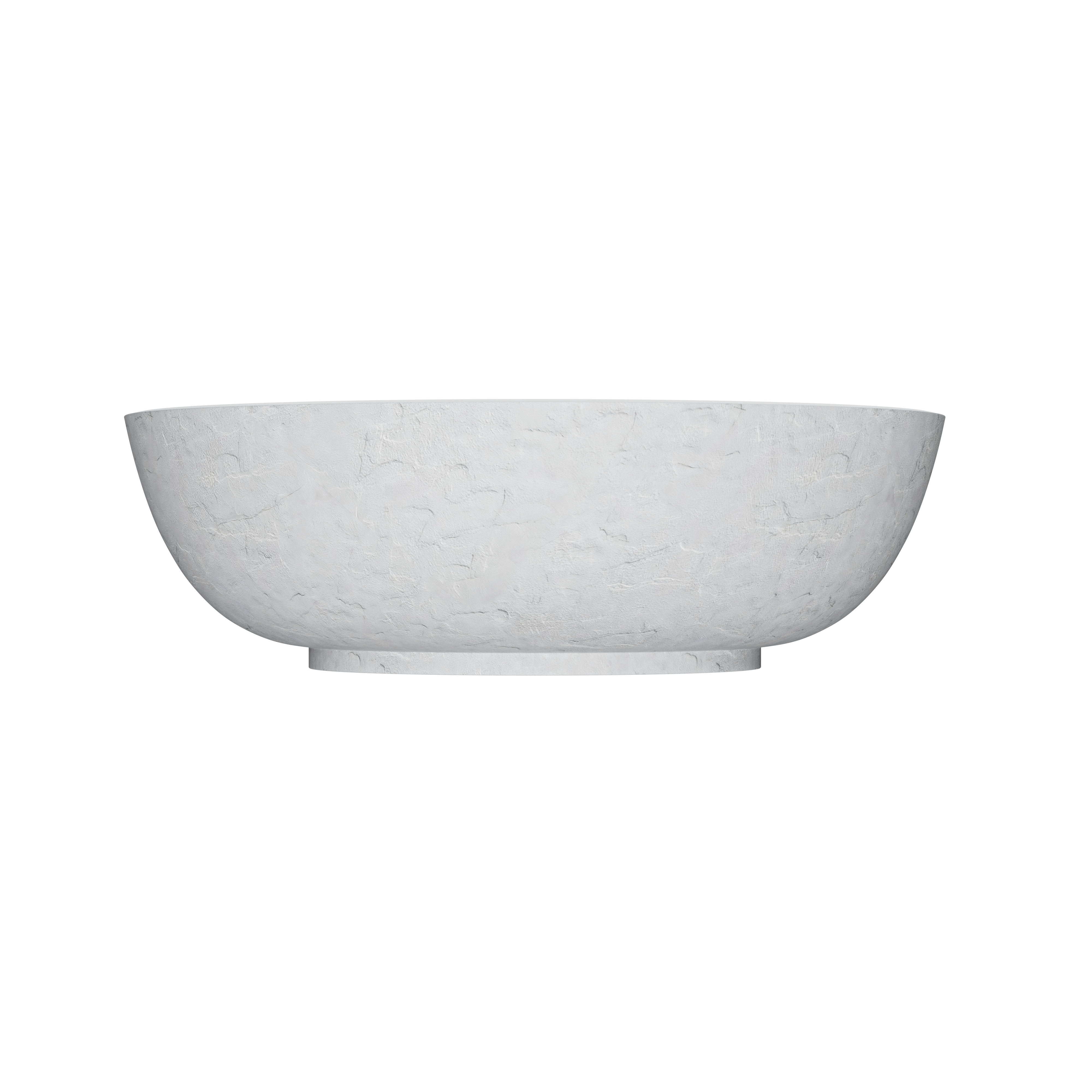
- Flexible Design — With greater flexibility in the materials and moulds used in their manufacturing, vessel basins are available in a wider range of shapes and colours than inset basins. This flexibility allows us to consider vessel basin options that are bold and contrasting, simple and cohesive, or anything in between.
- Wall Mounted Tapware — The raised nature of a vessel basin means it can be paired perfectly with wall mounted tapware. Creating layers in your bathroom’s design, the pairing of a vessel basin with wall mounted tapware creates a refined, modern look that appears thoughtful.
- Increased Storage — With no recess into the vanity, maximum storage space is retained.
Cons
- Harder to Clean — With the basin and slab top being two separate pieces, rather than one integrated piece, vessel basins can be harder to clean than inset basins. With a vessel basin, the outside of the basin and its join to the slab top require special attention when cleaning.
- No Overflow — Having an overflow is not an option for vessel basins. This is because any exposed plumbing above the slab top would be sure to disrupt the modern and sophisticated aesthetic of a vessel basin.
More Questions?
If you’re seeking further guidance on basins and which might be best for you, please don’t hesitate to connect with one of Newtech’s friendly team members on 0800 728 662, or email them at sales@newtech.co.nz